
Article · 2026
Midterms: the day Israel became an American electoral issue
Translated from the French. Original: Midterms : le jour où Israël est devenu un enjeu électoral américain · French version
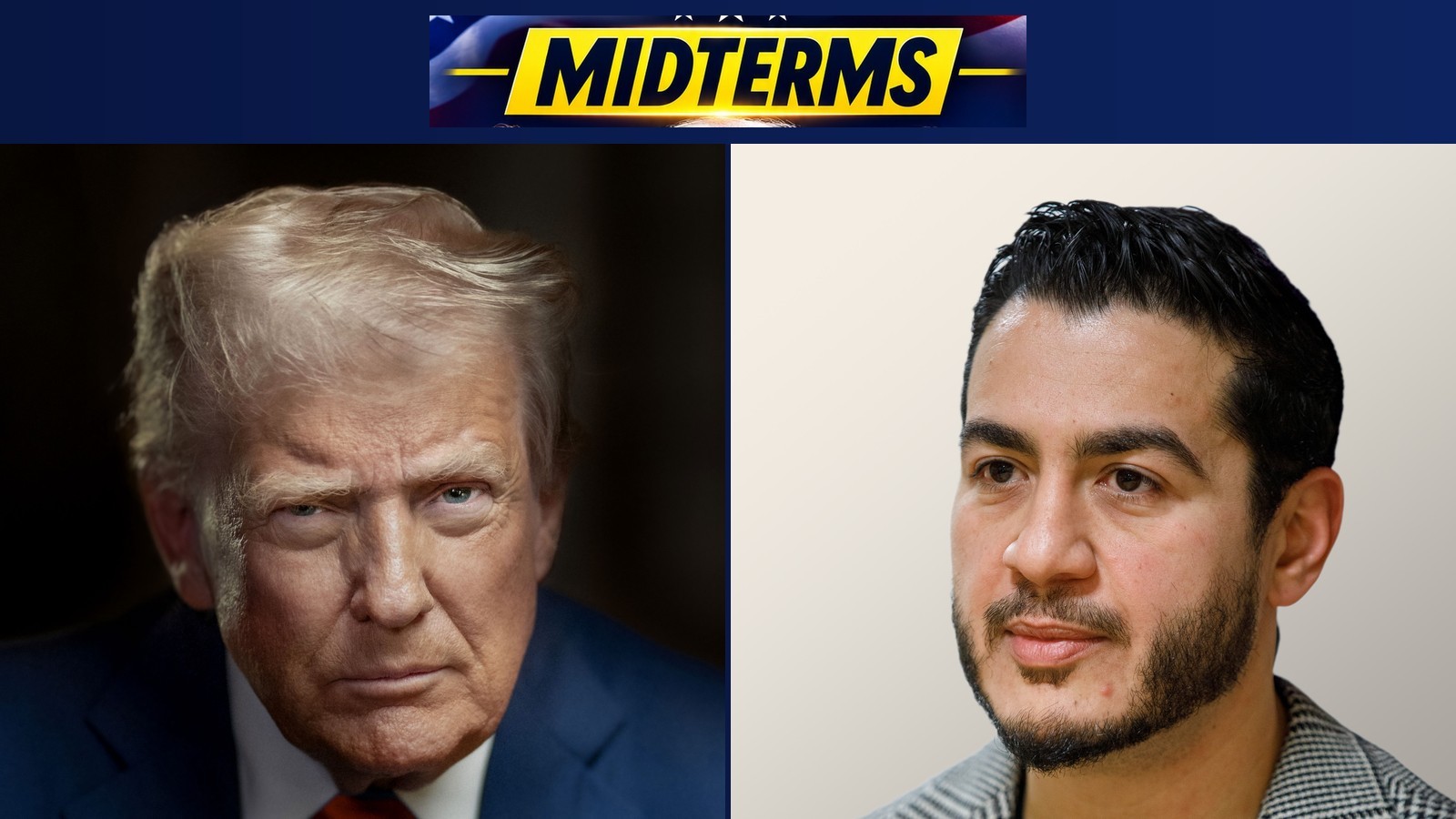
Americans vote this Tuesday to renew the House of Representatives and a third of the Senate. The price of gas, the war in Iran and the Democratic split over Israel will decide the vote. The last two years of Donald Trump's term depend on it, as does the race to succeed him.
A referendum Trump prepared by suspending a war
Midterm elections always penalize the sitting president. This time, the scale is unusual. Trump arrives at the vote at the low point of his second term, very close to his historic floor, the one from the days after the Capitol assault in January 2021. He is lower than Joe Biden on the eve of his own midterms. Since 1946, only one president has gone into this contest more unpopular: Harry Truman. In 2018, when he was half as unpopular as he is today, Trump lost about forty House seats.
I was in the United States ten days ago. The campaign ads, the conversations, everything revolved around three things: the war in Iran, the price of gas, the money spent in the Middle East. The Democrats don't even need to attack Trump head-on. Their message fits in one sentence: the war is the price of a full tank.
Trump understood that. In early October, he wrote on Truth Social that the United States would not attack Iran before November 3. A president who times a military pause to the electoral calendar is acknowledging that this war is costing him votes.
The price of a full tank, barometer of a presidency
Since the February strikes, Iran has closed the Strait of Hormuz, through which a fifth of the world's oil passes. The gallon has gone up by more than a dollar and remains above four, the barrel above one hundred. On the cost of living, fewer than one Republican voter in two approves of the president's handling. Trump called the increase a "small thing to pay" to be done with Iran. For the American filling up this morning before going to vote, it is not a small thing.
A large majority of Americans judge this war contrary to the country's interests and too expensive, in soldiers' lives as well as in dollars. It was poorly sold. Nobody explained to them why it concerned them, and they pay for it every week at the pump.
The divide now runs through the Trump camp. On one side, the evangelicals, the party's pro-Israel base. On the other, the "America First" current, hostile to any war abroad. Tucker Carlson and Marjorie Taylor Greene broke with the Republican Party this summer, Carlson accusing the party of putting loyalty to Israel above American interests. Even Mike Rogers, the Republican Senate candidate in Michigan and a Trump endorsee, calls in an ad for a quick end to the war.
And voters are voting blind. Trump says there are "one or two" objectives left in Iran, including a nuclear site, and hints that the strikes will resume after the vote. As of tomorrow, he will have a free hand.
Seen from Israel, the war has produced results: the Iranian regime decapitated, Ali Khamenei killed, the nuclear program set back. But it has cost Trump the voter who had voted for him for his wallet.
Three seats to flip the House
The Democrats need only three seats to retake the House, and analysts consider it almost done. In the Senate, the map has opened up where nobody expected it: Texas, Alaska, Ohio, Kansas. Three races to watch tonight. In Maine, Susan Collins, thirty years in office, shows the worst numbers of her career, even though she defied the polls in 2020. In Texas, Ken Paxton is neck and neck with a Democrat, something never seen before. In Michigan, Abdul El-Sayed, a harsh critic of Israel, is narrowly ahead of Mike Rogers, in a state where Republicans always finish strong.
For the House, the battle was fought beforehand, over the electoral maps. Texas redrew its districts to hand Trump five seats, and California answered with a referendum. The rest will be decided in the suburbs of Pennsylvania, around New York, and in southern Texas, among the Latino voters who moved to Trump in 2024 and are hesitating today.
With the House, the Democrats get three weapons. First, investigation: every committee chair can issue subpoenas and demand documents, and Hakeem Jeffries, the future speaker, has already asked his colleagues to prepare investigations of Trump, his family and his administration. Impeachment is "neither on the table nor off the table." The first target would rather be Pete Hegseth, the Defense Secretary, already the subject of a removal motion filed by a Republican, Thomas Massie. Second, war: the Constitution gives Congress the power to declare it, and the House holds the budget. No money for Iran without it. Finally, the agenda: health care, Medicaid, tariffs. Nothing will get through the Senate or the veto, but Trump would go from all-powerful president to besieged president.
Israel, the Democratic divide
This is the real upheaval of this election. During the campaign, in a very large number of Democratic debates and primaries, the same words kept coming back: "genocide," "famine," and elected officials funded by the pro-Israel lobby who "serve two masters." Dual loyalty, the oldest antisemitic cliché, uttered by candidates for the United States Senate. Three years ago, that was unthinkable in this party.
The numbers show the shift. In 2025, fifteen Democratic senators followed Bernie Sanders to block arms sales to Israel. Last April, there were forty out of forty-seven. Chuck Schumer, the highest-ranking Jewish elected official in American history, voted against, isolated in his caucus. All the Democratic presidential hopefuls in the Senate voted for the embargo.
This shift went through the primaries, where almost nobody votes and nobody is watching. An organized, determined minority is enough there, including activists who make no secret of their hostility to America itself. It is through this small door that El-Sayed became a candidate in Michigan, by a few thousand votes, and that Zohran Mamdani became mayor of New York.
AIPAC thought it could respond with money. It spent unprecedented sums to block El-Sayed in Michigan. El-Sayed won, and turned the weapon around: they buy elections, I am not for sale. Among Democrats, being attacked by AIPAC now earns votes. Two weeks ago, the lobby announced that it was ending endorsements of candidates in its own name. The money now flows through a super PAC with a neutral name, United Democracy Project, and through third-party committees. The name has disappeared from the check, the money stays the same. It fools no one, and it is a major failure.
Benjamin Netanyahu has drawn the lesson. During the Israeli campaign, he called for making the most of the two years Trump has left, because the next administration might suspend military aid. He did not say "Democratic." Between JD Vance, Tucker Carlson and a Republican generation that refuses to pay for other people's wars, the White House of 2029 will not necessarily be kinder, even if Republican. Trump is a parenthesis in American politics, not a lasting line.
The Jewish vote after October 7
Since Roosevelt, two out of three American Jews vote Democratic, and this year's national polls confirm it again. But within that majority, red lines have appeared. This is not about criticism of the Israeli government, which American Jews practice themselves. The red line is the questioning of Israel as a Jewish state, the total embargo, the word "genocide," closeness to antisemitic rhetoric. When a Democratic candidate crosses it, the vote swings, even among voters who have never voted Republican.
Detroit is the proof. Facing El-Sayed, part of the Jewish community, Democratic forever, announced in an open letter that it was voting for Mike Rogers. It is not a rallying to the Republican Party, it is a refusal.
New York is the other. Mamdani's election was presented as accepted by New York Jews. That is false: an overwhelming majority voted against him, and some of those who supported him, often young people drawn by his promises on rent, have turned away from him. In the state that is home to the largest Jewish community in the country, the Democratic lead among Jewish voters has collapsed in four years. Those votes could save a Republican seat north of the city tonight.
This vote was born on campuses and in front of synagogues, when part of the American left chose its side. This election is its first big test. The real measure will come in 2028, in Pennsylvania, Michigan, Georgia, states decided by a few thousand votes. Republicans don't need to win the Jewish vote, they just need to narrow the gap.
2028 starts tomorrow morning
Trump cannot run again. JD Vance has set his timetable: first win the midterms, then discuss his candidacy with the president. Trump plays kingmaker, touts an "unbeatable" Vance-Rubio ticket and keeps the question of a prohibited third term vague, to stay at the center of the game. Vance has the post and the activist base, Marco Rubio the party machinery and the donors.
Everything depends on tonight. A heavy defeat would make Vance the heir to a failure, and he is the one carrying the Iran file: his letter has just arrived in Tehran to restart negotiations. The America First current would then look for its candidate, and Marjorie Taylor Greene has already chosen Tucker Carlson. If the damage is limited, Vance and Rubio will claim the credit, and Trump will remain the arbiter.
For Israel, one certainty is already taking shape. The Democratic presidential hopefuls voted for the embargo, the Republican next generation wants fewer wars in the Middle East. Whoever he is, the next American president will be less pro-Israel than Donald Trump.