
Article · 2026
Is Trump's support for Netanyahu disinterested? Iran, midterms, Lebanon and the Houthis
Translated from the French. Original: Le soutien de Trump à Netanyahou est-il désintéressé ? Iran, midterms, Liban et Houthis · French version
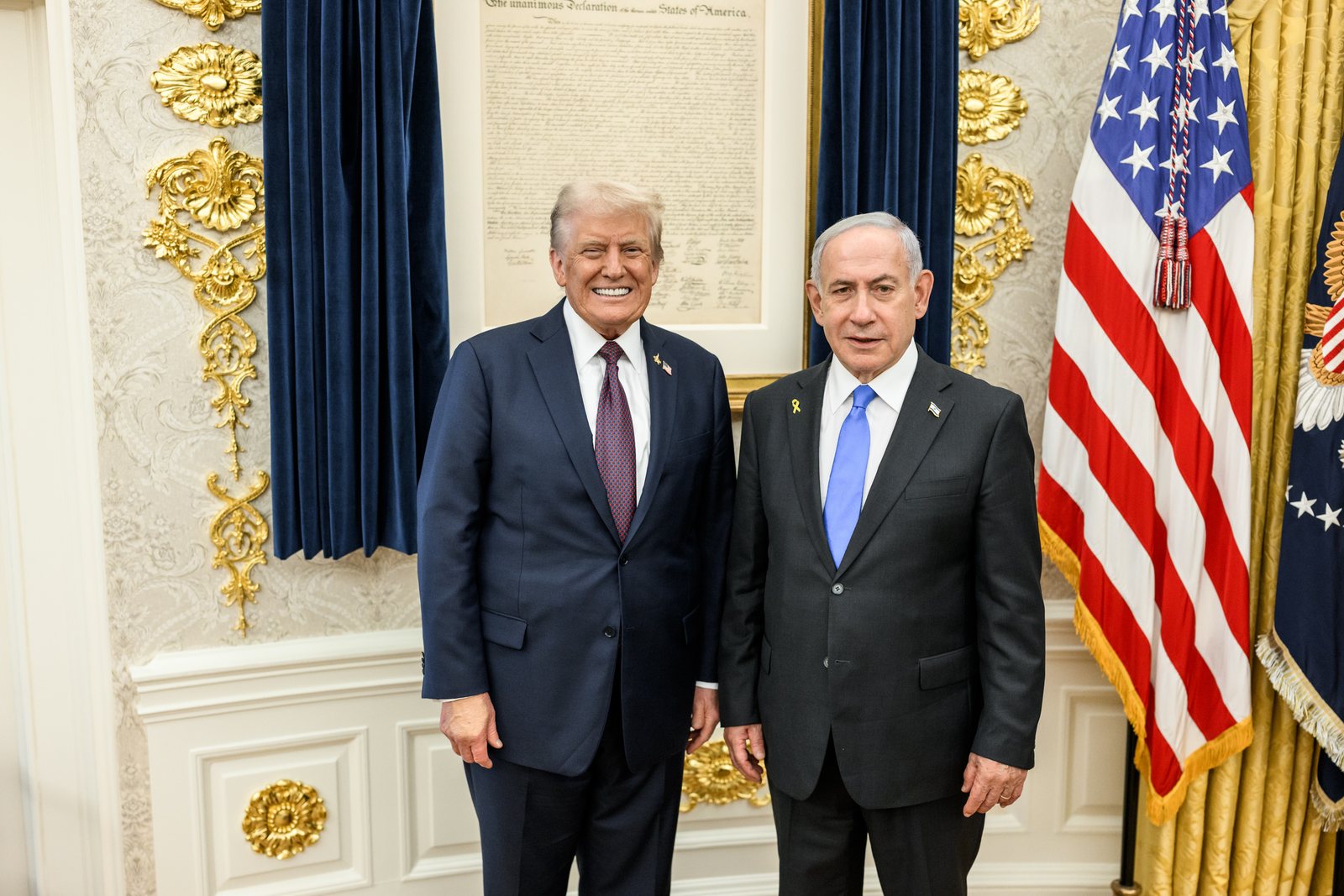
When Donald Trump backs Benjamin Netanyahu, he is not doing a friend a favor: he is defending his own interests, and he does not hide it. On October 18, urging Israelis to vote for Bibi, he gave the reason himself: "If Israel has the wrong leader, meaning anyone other than Bibi, America will have to do this job itself, and I am not inclined to do so."
This support plays out on several fronts. In the United States, it can be politically costly for Trump; in Iran, it rests on a real but limited convergence; in Lebanon and with the Houthis, it runs into clear disagreements. I go through each of these files here.
A support with a price
The job Trump refers to is Iran. Since February 2026, Americans and Israelis have been waging war together on the Islamic Republic, and Washington wants a partner that carries part of the load. On Sunday, October 25, Trump repeated it: "Vote for Bibi, we have to finish the job we started."
The support is also leverage. Trump has asked President Herzog to pardon Netanyahu, who is still on trial for corruption. His tone varies with the moment: in June, furious at the escalation in Lebanon, he called Netanyahu "crazy" on the phone, which he later confirmed himself to reporters, and in private he reportedly thinks Bibi is his own worst enemy. He supports him, but he expects something in return on Gaza and Lebanon, and above all a normalization between Israel and Saudi Arabia, the grand diplomatic prize he is after. Domestic politics also count, since evangelicals are the core of his electorate.
Then there is the bet itself. Trump is the man who says "I don't like losers," "I hate losers." Yet he waited months before getting involved in the Israeli election, against his advisers' counsel, and did so only nine days before the vote, without knowing whether Bibi would come out ahead. Netanyahu did not lose, but he left about ten seats on the table, according to the latest results. A few days before his own midterms, Trump would have liked a big victory to show off, and for now he is left with a stalemate.
Could Israel cost Donald Trump the midterms?
Ahead of the midterm elections on November 3, this support for Israel is more likely to hurt Trump. Israel is not the only factor: it is the war against Iran, and what it costs, that weighs. Nearly two Americans in three disapprove of his handling of the war, and a gallon of gas has gone from under three dollars to more than four. During a stay in the United States in October, I watched the campaign ads: almost all of them revolve around the war, the cost of living, the price of gas and the money spent helping Israel, and the arguments of both camps converge on this point.
The rift is not limited to Democrats; it runs through Trump's own camp. On one side, the evangelicals and the MAGA base ("Make America Great Again"), who remain solid. On the other, the "America First" camp: Tucker Carlson and Marjorie Taylor Greene have announced they will not support Republicans in November, Carlson accusing the party of serving the interests of a foreign country. Among Republicans under 50, a majority now has an unfavorable view of Israel. This support is therefore likely to cost Trump even more on November 3.
A midterm defeat: little effect on the war, a great deal on domestic politics
A defeat in the midterms would not change Trump's status: he would remain commander in chief, and the vote has no bearing on the ability of the United States to engage in the war against Iran or elsewhere. Domestic politics, however, would be badly disrupted. Democrats are already promising a new impeachment procedure, which takes time, money and a great deal of energy, while the media would likely focus on it. The last two years of the term could be disturbed.
History shows, though, that American presidents without a majority at home turn heavily to foreign policy, as George W. Bush and Bill Clinton did. Donald Trump is already doing so, and would have little to change in his current practice.
Iran: interests aligned in the short term, end goals that diverge
In Iran, American and Israeli interests are aligned in the short term, but not on the end goal. Netanyahu wants the regime to fall: before young officers, he repeated that his directive to the IDF and the Mossad is to overthrow it. Trump is still torn between a deal and force. On October 25 he said: "Am I going to make a deal with them, or am I going to finish them off?" His conditions are zero uranium enrichment, removal of the enriched uranium stockpile and free navigation in the Strait of Hormuz. Tehran rejects them outright, and for now the situation is a total stalemate.
Everything points to a resumption of strikes after the two elections. Defense Secretary Pete Hegseth traveled to Jerusalem to discuss it, and a third aircraft carrier, with some 10,000 Marines, is due in the region at the end of November. The targets are known: energy, nuclear sites and missiles, sparing refineries so as not to push up the price of oil. Trump himself says something will happen very soon, and most people expect it to be after the elections.
The alignment will therefore be military rather than political. Trump wants an exit that lowers the price of oil and lets him say he won; Israel wants the threat gone for good. And since the Israeli government has no majority at this stage, Trump has one more reason to keep control.
Lebanon: agreed on Hezbollah, at odds over timing, the Israeli presence and method
On the goal, the two men agree: Hezbollah must be disarmed. Their differences concern timing, the Israeli presence and method.
On timing, Trump links Lebanon to Iran, since Tehran demands a ceasefire on all fronts. When Netanyahu threatened to bomb Beirut on June 1, Trump called him, called him crazy and had the strikes stopped so as not to derail the negotiations. At the G7 he did it again in front of the cameras, in a rather paternalistic tone: "Bibi gets carried away sometimes, we have a little dispute over Lebanon, I tell him he can use a lighter hand."
On the Israeli presence, Trump announced in midsummer that Israel was going to leave southern Lebanon, as if it were settled. The very next day, Defense Minister Israel Katz answered him almost to his face: Israel asked nobody's permission to enter Lebanon and has no intention of leaving as long as Hezbollah is armed. Trump came back to the charge by phone, and the back-and-forth continues.
That leaves method, because the two capitals do not believe in the same solution. Washington bets on the Lebanese state, on President Joseph Aoun and his army. The American idea is pilot zones: Israel withdraws from a few villages, the Lebanese army dismantles Hezbollah there, and the situation advances step by step. Marco Rubio even believes Israel could do more to strengthen Beirut. Netanyahu answers that he never believed in this approach: "You can clean up these zones? Fine. You can't? We will take care of it." Washington no longer thinks it can change Jerusalem's mind on this file, but keeps trying to assert itself at least diplomatically.
The Houthis: where Washington and Jerusalem diverge most, with Saudi Arabia in the background
The Houthis, Yemeni rebels backed by Iran, stand in the way of the Israel–Saudi normalization Trump would like to announce, and this is where the gap between Americans and Israelis is widest. The United States made a separate peace with them in May 2025, through a truce negotiated by Oman: the Houthis no longer fire on American ships, America no longer bombs them, and Israel was not included. The deal provoked a real sense of betrayal in Israel.
Since the summer, the Houthis have turned their fire toward Saudi Arabia. Mohammed bin Salman asked Trump to strike, and Trump refuses: a few days before the midterms and in the middle of the war against Iran, he does not want a new front. Israel sees an opportunity instead and offered to strike alongside the Saudis. Riyadh declined, since being seen with Israel would go over badly with Saudi public opinion, but Israel supplies it with intelligence through the American military. The cooperation remains very discreet, with an eventual expansion of the Abraham Accords to Saudi Arabia in view. Some Saudis have also tried to negotiate a ceasefire with the Houthis in Tehran, which suggests a more directly diplomatic solution is possible.
The risk is November. If strikes on Iran resume, the Houthis may retaliate and the American truce may collapse. Washington and Jerusalem would then find themselves aligned by force of circumstance.