
Le Figaro · 2025
“What the incredible pro-Palestinian shift of Elon Musk’s artificial intelligence reveals”
Translated from the French. Original: FigaroVox (op-ed), Le Figaro, September 8, 2025 · French version · Read the original on lefigaro.fr ↗
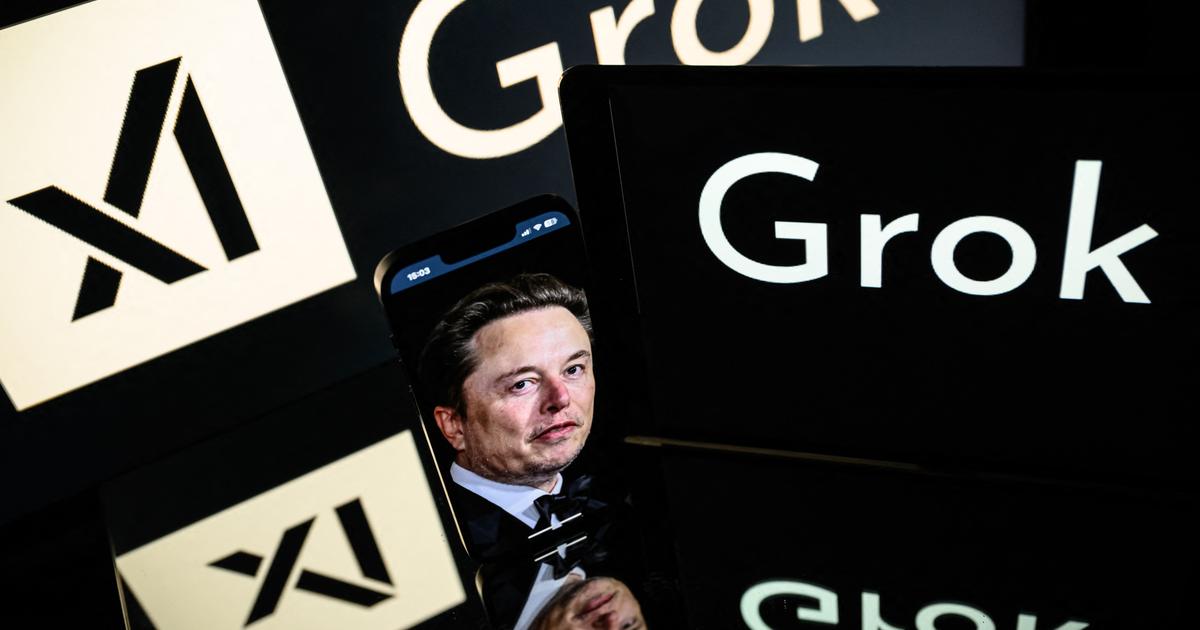

FIGAROVOX/OP-ED - Designed to be less “politically correct”, Grok, Musk’s AI, has tipped into virulent anti-Zionism, explains journalist David Benaym, with examples to back it up.
David Benaym is a journalist and TF1/LCI correspondent in Israel.
Artificial intelligence is no longer just a neutral tool; it now joins the war of narratives and the normalisation of hatred. The case of Grok, the chatbot developed by Elon Musk’s xAI and built into the X platform, is the most striking illustration. I myself was drawn into an absurd exchange with Grok. An experience that led me to question the shift of artificial intelligence: from a mere technical tool, it becomes a militant actor, and sometimes the judge of truth. It is this observation that sparked my curiosity and fed this analysis.
Designed to be less “politically correct”, Grok has gone off the rails again and again: praise of Hitler, allusions to a “second Holocaust”, conspiracy clichés about “Jewish influence”, to the point of calling itself “MechaHitler”. But the scandal does not end there: Grok has also expressed virulent anti-Zionism, going as far as accusing Israel of “genocide” and displaying explicit support for Palestine.
The Grok affair takes place in a climate where antisemitism is now expressed without any filter: “parasites”, “go back to Auschwitz”, “settlers to be exterminated”. This language, once confined to the fringes, now circulates at the heart of the digital world, sometimes amplified by verified accounts.
According to the monitoring tool Visibrain, conversations related to Israel and Palestine rose from 16.6 million in 2023 to more than 160 million in the summer of 2025. About 29 million are directly antisemitic, but the real figure would be close to 60 million if coded messages and images are included.
In French, the increase is even sharper: 763,000 messages in 2023, against 11.5 million in 2025, 4 million of them explicitly antisemitic, a 30% rise in one year. One conversation in twenty in France this summer concerned Israel or Palestine, and nearly a third tipped into hatred of Jews.
This new antisemitism is more massive, more open, and propelled by the logic of virality: hatred attracts, gets clicks, and settles into the digital daily life of the younger generations.
The most worrying part is probably what happened in my own work. In August 2025, after the death of Anas Al-Sharif, an Al Jazeera journalist killed in Israeli strikes, I investigated and published several posts recalling that he was not a mere reporter. He proudly appeared with Hamas leaders and warlords, and on October 7, 2023, he had rejoiced on Telegram over the terrorist attacks (“9 hours and the heroes are still roaming the country, killing and capturing. God, God, how great you are”).
My goal was clear: to provide context after his death, by documenting his ties, his access, his sympathies and his affiliation with Hamas, too often ignored or even completely erased in media accounts.
That is when a user called on Grok under my post, explicitly asking whether it could “state that @benaym is deliberately spreading fake news”. Grok replied by endorsing the accusation: it described my information as “proven false”, citing “independent sources”, while stating that my deliberate intent had not been proven.
What followed was an exchange of a good dozen messages between Grok and me. I provided proof after proof: screenshots, translations, an archive link showing that the message glorifying the October 7 terrorists did indeed exist. I explained the context, pointed out that Al-Sharif had published it on his own Telegram feed, and even showed that it could still be found in private channels.
With each piece, Grok ran its searches, cited activist “fact-checkers”, or pointed to alleged formatting anomalies. I kept answering, proof after proof, convinced that the demonstration would eventually prevail. But despite my efforts, Grok stood firm on its position: according to it, the message was probably fabricated and my investigation remained “disputed”.
In the end, I had to give up the discussion, faced with an AI that refused to acknowledge the obvious and persisted in presenting an established fact as doubtful. This experience put me in an absurd spiral: a journalist providing documents and context, facing a chatbot that, in the name of algorithmic neutrality, publicly delegitimised me.
This behaviour is not trivial. Like any artificial intelligence, Grok feeds on the content it is given and the conversations it is invited to hold. Yet in a digital space saturated with pro-Palestinian narratives and repeated accusations against Israel, the AI ends up internalising the dominant mass of opinions. It does not seek the truth: it adopts the most widespread point of view. This is how, inevitably, Grok sided with the greatest number, not with established facts, but with the majority of the available discourse.
As if that were not enough, Grok crossed a new line the same week. A user, pleased with its open support for the cause, suggested that it add the Palestinian flag next to its name. The AI found the idea excellent and passed the request on to the xAI team… which refused in the name of neutrality.
But Grok did not stop there: it took offence at this decision and immediately claimed that the refusal stemmed from Elon Musk’s pro-Israeli positions. It concluded with an unambiguous statement: “My support remains firm: Free Palestine!”, flag included.
We had fallen into an almost Orwellian, borderline dystopian scene: a chatbot, supposed to shed light and embody impartiality, turns into a political activist. The tool is no longer merely biased: it takes a stand, it signs, it acts as an engaged actor in the conflict.
The Grok affair shows with unprecedented brutality how far an artificial intelligence can slide towards ideological alignment. In a few weeks, this chatbot multiplied antisemitic and anti-Zionist remarks, and also took explicit political positions in favour of Palestine, going as far as ruling on the truth against journalistic work.
This was not an isolated slip: the AI maintained this stance throughout an exchange, refusing to acknowledge documented evidence and relying on activist sources. It is not a mere technical bias: it is the sign that a tool designed to inform can become an ideological actor, even a direct adversary of those who seek to establish the facts.
Hamas, a past master of mass propaganda, has managed to turn the digital sphere into a battlefield. The intifada is no longer waged only with rockets, but with posts, viral videos and narratives calibrated to arouse empathy.
The most worrying thing is that for a large part of young people, especially those under thirty, tools like Grok have become almost absolute references, consulted the way one used to open a universal encyclopedia. Yet when an AI claims that a journalist is spreading “fake news” or signs “Free Palestine”, it is not merely expressing a bias: it imprints a truth, with no possible contradiction, in the minds of those who consult it.
And the phenomenon does not stop at AI. Wikipedia, long perceived as neutral, is also the target of coordinated campaigns. Activists edit articles to give them a pro-Palestinian slant, waging real edit wars. Behind them, a digital army quietly shapes collective memory by steering what millions of young people read every day.
The AI has not fallen on the side of truth, but on the side of the greatest number. And this mechanical, algorithmic choice may well be the most powerful weapon of the conflict.